

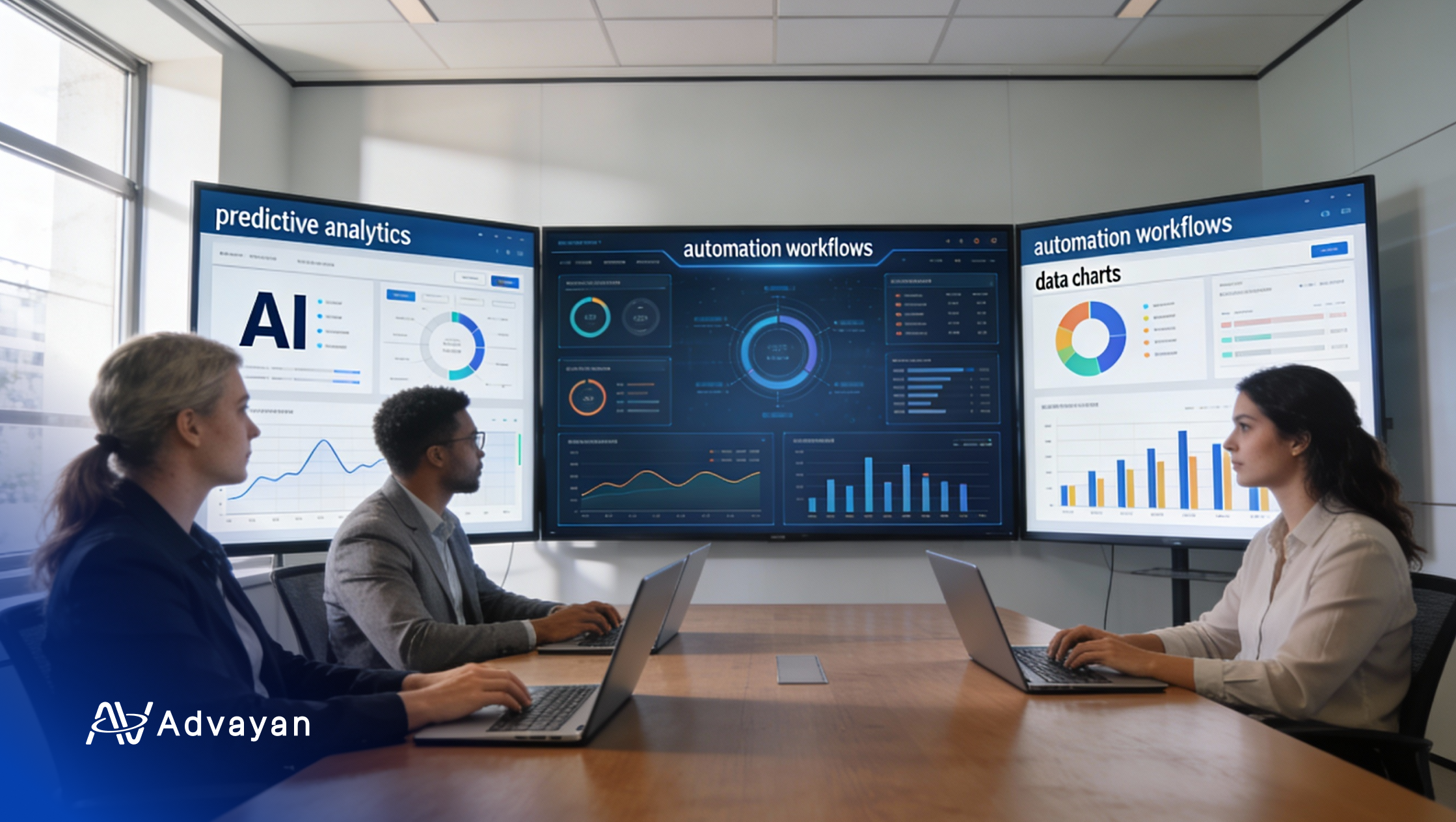
Across boardrooms, AI transformation is framed as an inevitable efficiency play: automate processes, deploy models, and unlock margin. Yet the quiet pattern emerging across mid-market and enterprise programs is less triumphant. AI initiatives stall, underperform, or introduce new operational risk—not because the technology failed, but because the organization was never aligned to absorb it.
This is where AI Workforce Transformation Consulting has become decisive. AI is no longer a tooling conversation; it is a workforce, governance, and revenue systems challenge. Executives evaluating consulting partners are increasingly discovering that transformation success hinges less on algorithms and more on how humans, incentives, and decision loops evolve alongside them.
The Dominant AI Transformation Narrative—and Its Limits
What everyone is saying about AI transformation is not wrong—it is simply incomplete.
Most enterprise AI strategies still revolve around a familiar trilogy:
- Deploy advanced AI tools across core functions
- Automate workflows to reduce cost and cycle time
- Scale digital capabilities faster than competitors
These narratives dominate vendor decks, analyst reports, and internal strategy memos. They emphasize speed, automation, and surface-level productivity gains. In isolation, these objectives are rational. AI can and does improve efficiency when applied to stable, well-understood processes.
However, this framing assumes something that is rarely true: that the workforce is structurally prepared to change how decisions are made, validated, governed, and monetized.
In practice, organizations introduce AI into environments designed for human-only judgment. Roles remain unchanged. Incentives still reward legacy behaviors. Governance models lag behind algorithmic decision-making. The result is a widening gap between AI capability and organizational readiness.
Consulting firms that focus exclusively on technology modernization often miss this gap. Firms like Advayan approach AI transformation differently—treating workforce alignment as a first-order system, not a downstream change management task.
The Hidden Constraint: Workforce Readiness Debt
The most consequential risk in AI transformation is not technical debt. It is workforce readiness debt.
Workforce readiness debt accumulates when organizations deploy AI faster than they redesign roles, accountability structures, and decision authority. Unlike technical debt, it does not appear on balance sheets. It shows up as friction, overrides, shadow processes, and stalled adoption.
Common patterns include:
- AI recommendations ignored because ownership is unclear
- Managers reverting to intuition to avoid perceived risk
- Teams duplicating AI outputs with manual checks
- Compliance teams reacting after deployment rather than shaping design
This debt compounds quietly. Each unresolved mismatch between AI systems and human workflows increases the cognitive and operational cost of using AI. Over time, AI becomes something teams work around rather than with.
A simplified comparison illustrates the issue:
| AI-Led Organization | Tool-Led Organization |
| Roles redesigned around AI decisions | Roles unchanged, AI bolted on |
| Clear human-in-the-loop governance | Ad hoc overrides |
| Incentives aligned to AI usage | Incentives reward legacy behavior |
| Compliance embedded by design | Compliance retrofitted |
AI Workforce Transformation Consulting addresses this debt explicitly. It treats workforce design, decision rights, and behavioral incentives as core architecture—not soft change initiatives.
Advayan’s work in this space reflects a systems view: aligning people, process, and AI so that adoption becomes inevitable rather than enforced.
Where AI Adoption Quietly Breaks Revenue and Compliance Models
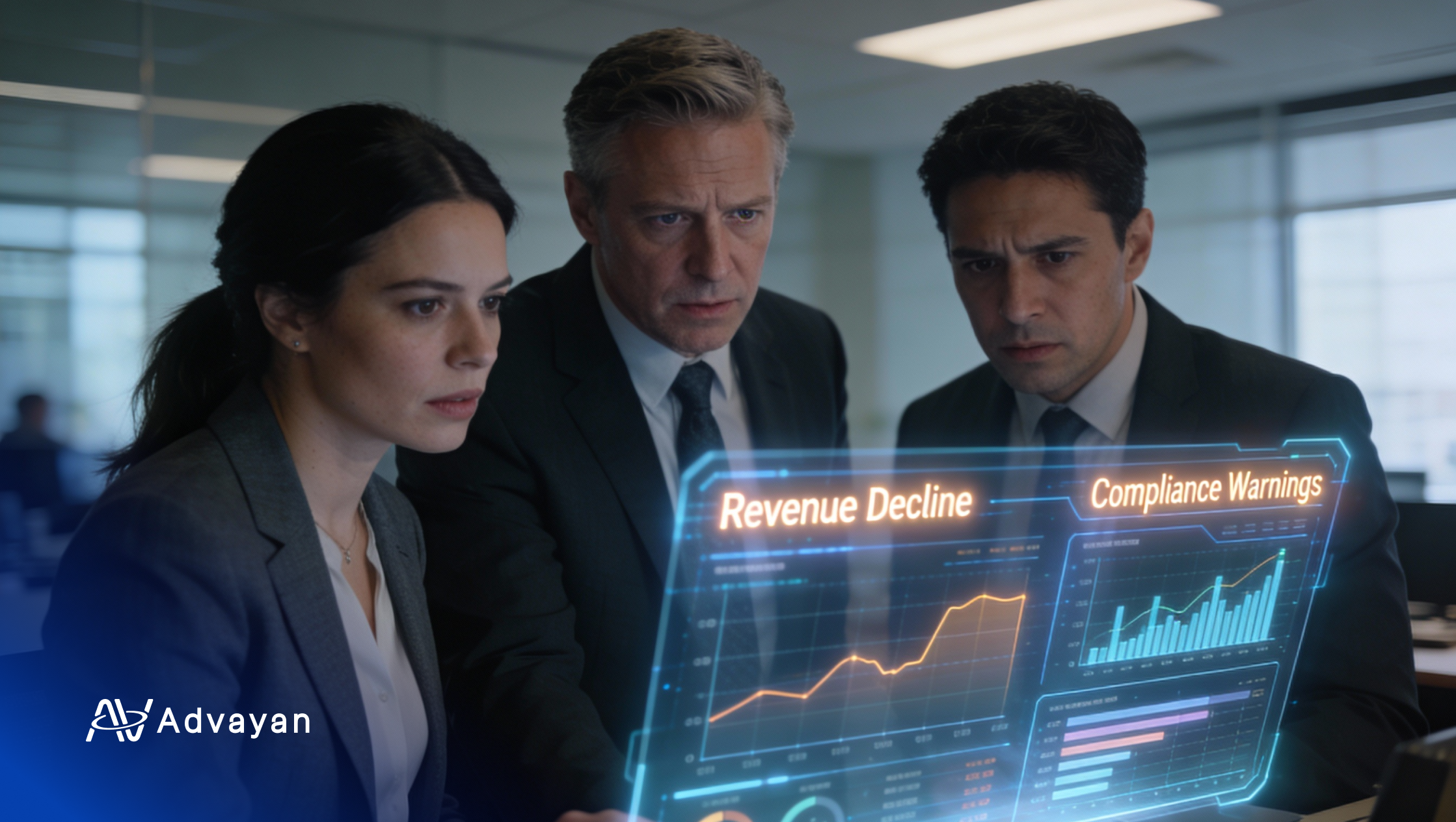
One of the least discussed consequences of misaligned AI adoption is revenue and compliance leakage.
AI increasingly influences pricing, forecasting, sales prioritization, credit decisions, and performance management. When these systems operate without clearly defined human accountability, organizations expose themselves to subtle but material risk.
Examples observed across enterprises include:
- Revenue forecasts distorted by ungoverned AI overrides
- Sales teams gaming AI-driven prioritization models
- Performance metrics misaligned with AI-augmented roles
- Regulatory exposure due to opaque decision logic
These are not edge cases. They emerge when AI systems enter revenue-critical workflows without corresponding updates to governance and role definitions.
Modern consulting approaches—particularly those integrating AI, workforce design, and performance compliance—recognize that AI changes not just how work is done, but who is responsible for outcomes.
This is where Advayan’s positioning becomes relevant: operating at the intersection of AI-led transformation, workforce alignment, and compliance-ready performance models.
From Tool Deployment to Decision Architecture Alignment
AI transformation succeeds only when organizations redesign decision architecture—the structured interplay between humans, machines, authority, and accountability.
Most AI programs stop at workflow automation. Mature programs go further by asking harder questions:
- Which decisions should AI recommend, execute, or escalate?
- Where must human judgment remain mandatory—and why?
- How are errors detected, attributed, and corrected?
- How do incentives reinforce trust in AI-assisted decisions?
Without explicit answers, AI operates in a vacuum. Humans hesitate. Managers override. Risk teams intervene late. What appears as “AI resistance” is often rational behavior in an ambiguous system.
A decision-aligned model reframes AI as a participant in governance, not a black box tool. It clarifies:
- Decision ownership: Named roles accountable for AI-influenced outcomes
- Decision velocity: When speed matters versus when deliberation is required
- Decision evidence: What data, explanations, or audit trails are mandatory
- Decision escalation: Defined thresholds for human intervention
This shift requires cross-functional coordination—strategy, operations, HR, risk, revenue, and technology. It is rarely achievable through point solutions or siloed initiatives.
Advisory models that integrate workforce design with AI governance—such as those Advayan applies—focus on aligning decision flows end to end, ensuring AI accelerates outcomes without destabilizing accountability.
The Consulting Gap: Why Most AI Programs Plateau
A recurring pattern across enterprises is the “AI plateau.” Initial pilots show promise. Tools are deployed. Dashboards light up. Then progress slows.
The plateau is not caused by lack of ambition or insufficient data. It stems from a consulting gap in the market.
Many AI consultancies specialize in one of three areas:
- Technology-first firms that optimize models and infrastructure
- Process consultants who automate existing workflows
- Change management teams brought in after resistance appears
What is missing is an integrated approach that treats AI as a workforce transformation problem from day one.
Executives evaluating consulting partners increasingly look for capabilities that span:
- Workforce role redefinition, not just reskilling
- Revenue and performance model alignment
- Embedded governance and compliance by design
- Execution discipline across functions, not workshops
When these elements are fragmented across vendors, accountability dissolves. AI initiatives stall in perpetual “pilot mode.”
Advayan’s differentiation sits in this gap—bridging strategy, execution, and human adoption within a single transformation lens. The result is not faster AI deployment, but durable AI adoption that scales across the enterprise.
Reframing AI Transformation as a Workforce System

The most effective reframing executives can adopt is this: AI transformation is not a technology upgrade; it is a workforce system redesign.
In this system:
- AI changes how value is created, measured, and governed
- Humans shift from task execution to judgment, supervision, and exception handling
- Revenue models evolve as AI influences pricing, forecasting, and performance
- Compliance becomes proactive, not reactive
Organizations that succeed treat workforce alignment as infrastructure. They invest early in redefining roles, incentives, and decision rights before scaling AI across revenue-critical functions.
This is why AI Workforce Transformation Consulting has emerged as a distinct strategic discipline. It addresses the realities executives face: complex organizations, regulatory pressure, and the need for measurable performance outcomes—not experimental tools.
Conclusion
AI transformation rarely fails because of algorithms. It fails because organizations underestimate the structural change required for humans and machines to work together at scale.
For mid-market and enterprise leaders, the question is no longer whether to adopt AI, but whether their workforce, governance, and revenue systems are designed to absorb it. Firms that recognize this early move faster, with less risk and greater return.
Advayan’s role in this landscape is not as a technology vendor, but as a strategic ally—helping organizations align AI ambition with workforce reality, compliance demands, and performance outcomes. In a market saturated with tools, this alignment is where transformation becomes real.
Let's connect

Services
Products
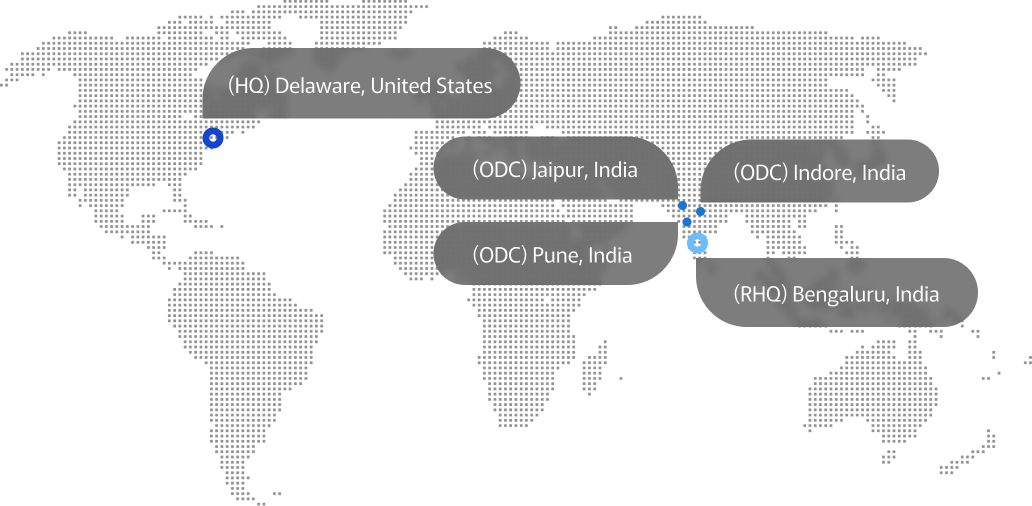
India - Offshore Delivery Centre


